

Blog
What Is 7-Hydroxymitragynine? 7-OH, Kratom, Effects, Risks, and Australian Considerations
19
Aug
Aug
7-hydroxymitragynine, commonly called 7-OH, is a naturally occurring alkaloid associated with the kratom plant (Mitragyna speciosa). It occurs naturally in kratom leaves at relatively low concentrations, but concentrated 7-OH products have become increasingly common.
Interest in 7-OH has grown because of its activity at opioid receptors and the emergence of concentrated tablets, powders, gummies, shots, and other products marketed around its effects. At the same time, health authorities have raised concerns about dependence, withdrawal, adverse effects, and the lack of approved medical uses.
The distinction between natural kratom leaf, concentrated 7-OH, and synthetic or semi-synthetic kratom-related compounds is important when trying to understand this subject.
What Is 7-Hydroxymitragynine?
7-hydroxymitragynine is an alkaloid associated with Mitragyna speciosa, commonly known as kratom.
It is often abbreviated as 7-OH, 7-OHM, 7-HMG, or 7-hydroxymitragynine. The compound is pharmacologically active at opioid receptors, which helps explain why concentrated products can produce opioid-like effects.
7-OH is naturally present in kratom leaves in relatively small amounts. The FDA has specifically distinguished naturally occurring trace amounts in kratom from products containing added or enhanced concentrations of 7-OH.
That distinction is important because a concentrated 7-OH product is not necessarily representative of ordinary kratom leaf.
What Is 7-OH Kratom?
The phrase 7-OH kratom is commonly used online to describe products containing elevated levels of 7-hydroxymitragynine.
However, the terminology can be confusing.
Kratom is the plant, while 7-OH is one of its alkaloids. Products marketed as “7-OH kratom” may contain concentrated 7-OH rather than simply ground kratom leaf.
A 2025 analysis of products sold online found a large market for semi-synthetic 7-OH and mitragynine pseudoindoxyl products. The researchers noted that many products were marketed using kratom-related terminology despite containing concentrated or chemically transformed compounds.
What Does 7-OH Do?
The question “what does 7 OH do?” is usually asking about its pharmacological and subjective effects.
7-OH interacts with opioid receptors, particularly the mu-opioid receptor. This activity distinguishes it from many ordinary botanical compounds and is one reason concentrated 7-OH products have attracted regulatory attention.
Reported effects can include changes in pain perception, relaxation, sedation, and other opioid-like effects. The experience can vary according to the product, concentration, individual factors, and whether other substances are involved.
The FDA describes concentrated 7-OH products as potent opioid products and warns that they have not been established as safe or effective for any medical use.
Hydroxymitragynine Effects and Pharmacology
The term hydroxymitragynine effects can refer to both the desired and unwanted effects associated with 7-OH exposure.
Because the compound acts on opioid receptors, effects can overlap with those associated with other opioid-active substances. However, the available evidence does not justify assuming that every 7-OH product will produce an identical experience.
Product composition is an additional concern. Concentrated products can differ in chemical content and may contain other kratom-derived or synthetic compounds.
The FDA has received reports associated with 7-OH products involving addiction, anxiety, depression, gastrointestinal problems, insomnia, seizures, and withdrawal symptoms.
7OH Side Effects and Safety Concerns
The potential 7OH side effects are an important part of understanding the compound.
Reported concerns associated with 7-OH products include:
- Dependence
- Withdrawal symptoms
- Anxiety
- Depression
- Insomnia
- Gastrointestinal distress
- Seizures
- Respiratory problems
- Cardiovascular effects
Not every reported adverse event can necessarily be attributed solely to 7-OH because products may contain multiple substances and concentrations can vary.
Nevertheless, the FDA has stated that concentrated 7-OH products can cause serious harm and recommends that consumers avoid them.
7-OH and Dependence
Repeated exposure to opioid-active substances can lead to physical dependence.
Dependence means that the body adapts to repeated exposure. When exposure is reduced or stopped, withdrawal symptoms may occur.
A 2026 case report documented acute opioid withdrawal after abrupt cessation of high-dose, chronic 7-OH use. The report involved a person who had transitioned from kratom and provides evidence that clinically significant withdrawal can occur following sustained high exposure.
This does not mean every person who encounters 7-OH will develop dependence. Risk can vary according to exposure, frequency, duration, individual biology, and other factors.
What Is Synthetic 7OH?
The term synthetic 7OH requires careful explanation.
7-hydroxymitragynine itself occurs naturally in kratom. However, concentrated commercial products may involve extraction, purification, chemical conversion, or other manufacturing processes rather than simply using ordinary kratom leaf.
Researchers have also identified newer synthetic or semi-synthetic compounds related to kratom alkaloids.
For example, mitragynine pseudoindoxyl is chemically distinct from 7-OH. It is another kratom-related compound that has attracted attention because of its activity at opioid receptors. Recent research has described a growing market of products containing 7-OH, mitragynine pseudoindoxyl, or combinations of the two.
Therefore, “synthetic 7OH” should not automatically be treated as synonymous with every synthetic kratom-derived compound.
What Is Mitragynine Pseudoindoxyl?
Mitragynine pseudoindoxyl is a distinct compound related to mitragynine and the broader chemistry of kratom.
It is not simply another name for 7-hydroxymitragynine.
Researchers have studied mitragynine pseudoindoxyl because of its selective activity at the mu-opioid receptor and its potential relevance to opioid pharmacology. Commercial products containing these compounds have also become a public-health concern because consumers may not always understand the chemical differences between them.
This is why product labels and marketing terminology should not be assumed to provide a complete picture of chemical composition.
What Is “Simply 7OH”?
Simply 7OH is a phrase that may refer to a product or brand name rather than a separate chemical substance.
When researching a product using this terminology, it is important to distinguish the brand or product name from the actual ingredient.
A name containing “7OH” does not by itself establish:
- Chemical purity
- Actual 7-OH concentration
- Presence of other ingredients
- Manufacturing method
- Regulatory status
- Safety
For health and legal questions, the underlying chemical identity is more informative than the marketing name.
What Is “70H Drug”?
Searches for “what is 70h drug” are often a spelling variation of “what is 7-OH drug.”
The terms generally refer to 7-hydroxymitragynine rather than a separate substance called “70H.”
The most common abbreviations are 7-OH, 7-OHM, 7-HMG, and 7-hydroxymitragynine.
Understanding these variations can help readers distinguish search terminology from the actual scientific name.
What Is Hydroxy 7?
“Hydroxy 7” is another informal search expression that can refer to 7-hydroxymitragynine.
The scientifically recognized name is 7-hydroxymitragynine.
Using the complete chemical name is preferable when researching scientific literature because informal product terminology can refer to different formulations or related compounds.
Is 7-OH the Same as Ordinary Kratom?
No.
Kratom refers to the plant Mitragyna speciosa and the botanical material derived from it. 7-OH is one of the alkaloids associated with the plant.
Natural kratom contains multiple alkaloids, with mitragynine being the primary alkaloid by abundance. 7-OH occurs naturally at much lower levels.
Concentrated 7-OH products can therefore differ substantially from traditional kratom leaf products in chemical composition and exposure.
The FDA specifically states that its recent actions concerning concentrated 7-OH are focused on products containing added or enhanced 7-OH rather than ordinary kratom leaf.
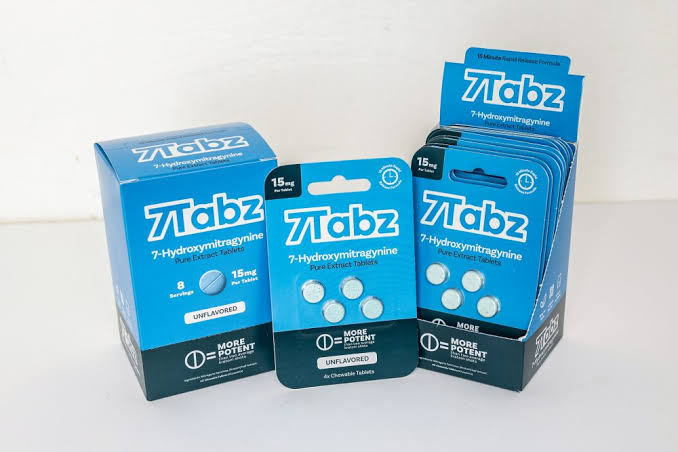
7-OH Tablets and Other Concentrated Products
7-OH has appeared in several product formats, including tablets, gummies, drink mixes, shots, and powders.
The format does not determine safety.
A tablet containing concentrated 7-OH should not automatically be considered equivalent to a kratom leaf product simply because both are associated with the word “kratom.”
The FDA issued warning letters in 2025 concerning companies marketing 7-OH tablets, gummies, shots, and other products. The agency stated that 7-OH products had not been evaluated as safe or effective for medical use.
7-OH Powder: Why Concentration Matters
7-OH powder can refer to a concentrated preparation rather than ordinary powdered kratom leaf.
This distinction matters because the amount of active 7-OH can vary substantially between products.
The FDA has warned that products containing added or enhanced concentrations of 7-OH may present greater risks as exposure increases.
Because of this uncertainty, consumers should not assume that a product labeled simply “7-OH powder” has a predictable composition or safety profile.
7-OH in Australia
Anyone researching 7-OH in Australia should distinguish between internet availability and legal availability.
Australia’s Poisons Standard provides the national scheduling framework for medicines and poisons, with scheduling decisions incorporated into relevant state and territory legislation. The current June 2026 Poisons Standard is in force.
The legal treatment of a particular product can depend on its ingredients, concentration, formulation, intended use, and applicable state or territory law.
For that reason, searches such as “buy 7-OH Australia” should not be interpreted as evidence that a product is lawful to purchase, possess, import, or supply.
Anyone considering a product containing 7-OH should verify its current status through the relevant Australian regulatory and state or territory authorities.
Can 7-OH Be Used as a Medicine?
7-OH is not an FDA-approved medicine.
The FDA states that there are no FDA-approved products containing 7-OH and that it has not found such products safe and effective for treating pain, anxiety, opioid withdrawal, or other conditions.
This is particularly important because some online marketing may present 7-OH products as alternatives to established medical treatments.
Claims about treating pain, anxiety, depression, opioid withdrawal, or other conditions should not be interpreted as evidence of clinical approval.
7-OH and Opioid Research
Despite the safety concerns, 7-OH remains scientifically interesting.
Researchers are studying how kratom alkaloids interact with opioid receptors and how compounds such as 7-OH differ from traditional opioids.
The research may eventually contribute to a better understanding of opioid pharmacology. However, laboratory findings should not be confused with evidence that commercially available 7-OH products are safe or appropriate treatments.
This distinction is particularly important because much of the current commercial market has developed faster than the clinical evidence base.
Why Product Labels Can Be Misleading
A product name alone cannot establish its chemical composition.
A product marketed as 7OH, 7-OHM, 7-hydroxy, or a kratom-related product may contain different concentrations or additional compounds.
A 2025 study examining commercially marketed 7-OH and mitragynine pseudoindoxyl products found substantial variation in product formulations and marketing claims.
For researchers and consumers, this reinforces the importance of independent analytical information rather than relying exclusively on marketing descriptions.
Frequently Asked Questions
What is 7-hydroxymitragynine?
7-hydroxymitragynine is an alkaloid associated with the kratom plant. It is commonly abbreviated as 7-OH and has activity at opioid receptors.
Is 7-OH the same as kratom?
No. Kratom is the plant, while 7-OH is one of its naturally occurring alkaloids.
What does 7-OH do?
7-OH interacts with opioid receptors and can produce opioid-like effects. Concentrated products have been associated with dependence, withdrawal, and other adverse effects.
What are common 7OH side effects?
Reported concerns include withdrawal, anxiety, depression, insomnia, gastrointestinal problems, seizures, and other potentially serious effects. buy 7-oh australia
Is 7-OH synthetic?
7-OH occurs naturally in trace amounts in kratom. Commercial concentrated products may involve extraction or other processing, while separate synthetic and semi-synthetic kratom-related compounds also exist.
What is mitragynine pseudoindoxyl?
Mitragynine pseudoindoxyl is a distinct kratom-related compound. It should not be treated as another name for 7-hydroxymitragynine.
Is 7-OH approved as a medicine?
No. The FDA states that there are no FDA-approved products containing 7-OH.
Final Thoughts
7-hydroxymitragynine is a naturally occurring kratom alkaloid with significant activity at opioid receptors. The recent growth of concentrated 7-OH products has increased scientific and regulatory attention, particularly because these products can differ substantially from traditional kratom leaf. buy 7-oh australia
The most important distinction is between natural kratom, naturally occurring 7-OH, concentrated 7-OH products, and newer synthetic or semi-synthetic kratom-related compounds.
Current evidence indicates that concentrated 7-OH products can carry meaningful risks, including dependence and withdrawal. The FDA currently advises consumers to avoid these products and states that 7-OH has not been approved for medical use.
